Thailand has been a fixture on the international golf circuit for decades — and for good reason. The Kingdom offers an extraordinary depth of golf experiences: from links-style challenges on Phuket's forested hills to flat, fast parkland courses outside Bangkok; from intimate boutique layouts on the Andaman coast to championship venues that have hosted European Tour events. For Australian golfers, Thailand is an accessible, affordable, and endlessly rewarding destination — a place where a week-long golf holiday Southeast Asia style can comfortably deliver five or six world-class rounds without breaking the budget.
Golf in Phuket — Thailand's Flagship Golf Destination
Phuket is where most first-time Australian golfers encounter Thai golf, and the island rarely disappoints. The interior landscape — rolling jungle-covered hills punctuated by rubber plantations — provides a dramatically different setting from beach resorts in Southeast Asia, and the island's eight or so courses vary considerably in character and challenge.
Blue Canyon Country Club
Blue Canyon's Canyon Course is arguably the most famous course in Thailand, having hosted the Johnnie Walker Classic twice and attracted multiple major champions to its fairways. Designed by Yoshikazu Kato and carved from a former tin mine and rubber plantation, the layout is defined by its canyon-side holes — none more dramatic than the par-3 14th, which plays across a finger of water to a green perched on the canyon's edge. The Lakes Course, a complementary 18 holes on flatter terrain, provides a more accessible contrast. Green fees for the Canyon Course typically run USD $130–$160 for visitors.
Red Mountain Golf Club
Cut into a former tin mine in Phuket's central hills, Red Mountain is one of Asia's most visually dramatic golf experiences. The elevated terrain creates sweeping views across the island and, on clear days, toward the Andaman Sea. The design — by Kidd Golf — uses the dramatic elevation changes intelligently, with fairways that tumble down hillsides and approach shots that demand precise distance control. Red Mountain regularly appears on lists of Asia's top 100 courses and should be on every serious golfer's Phuket itinerary.
Loch Palm Golf Club
For a quieter, more traditional parkland experience, Loch Palm Golf Club in Kathu Valley delivers a beautifully maintained layout that winds around a central lake. The course lacks the drama of its hill-course neighbours, but its groomed fairways, reliable greens, and relaxed pace make it a favourite for groups wanting a sociable round followed by a leisurely lunch. Green fees are among the most competitive in Phuket, making it a smart choice for mid-week rounds or additional games beyond your headline courses.
Golf in Hua Hin — Thailand's Royal Golf Town
Three hours south of Bangkok by road (or a scenic train journey), Hua Hin has been Thailand's royal retreat for over a century, and its golf credentials match its regal reputation. The region has attracted investment from some of golf's most celebrated designers, and the result is a concentration of quality that rivals Phuket while offering a distinctly different atmosphere — quieter, more refined, and with a strong local Thai culture.
Black Mountain Golf Club
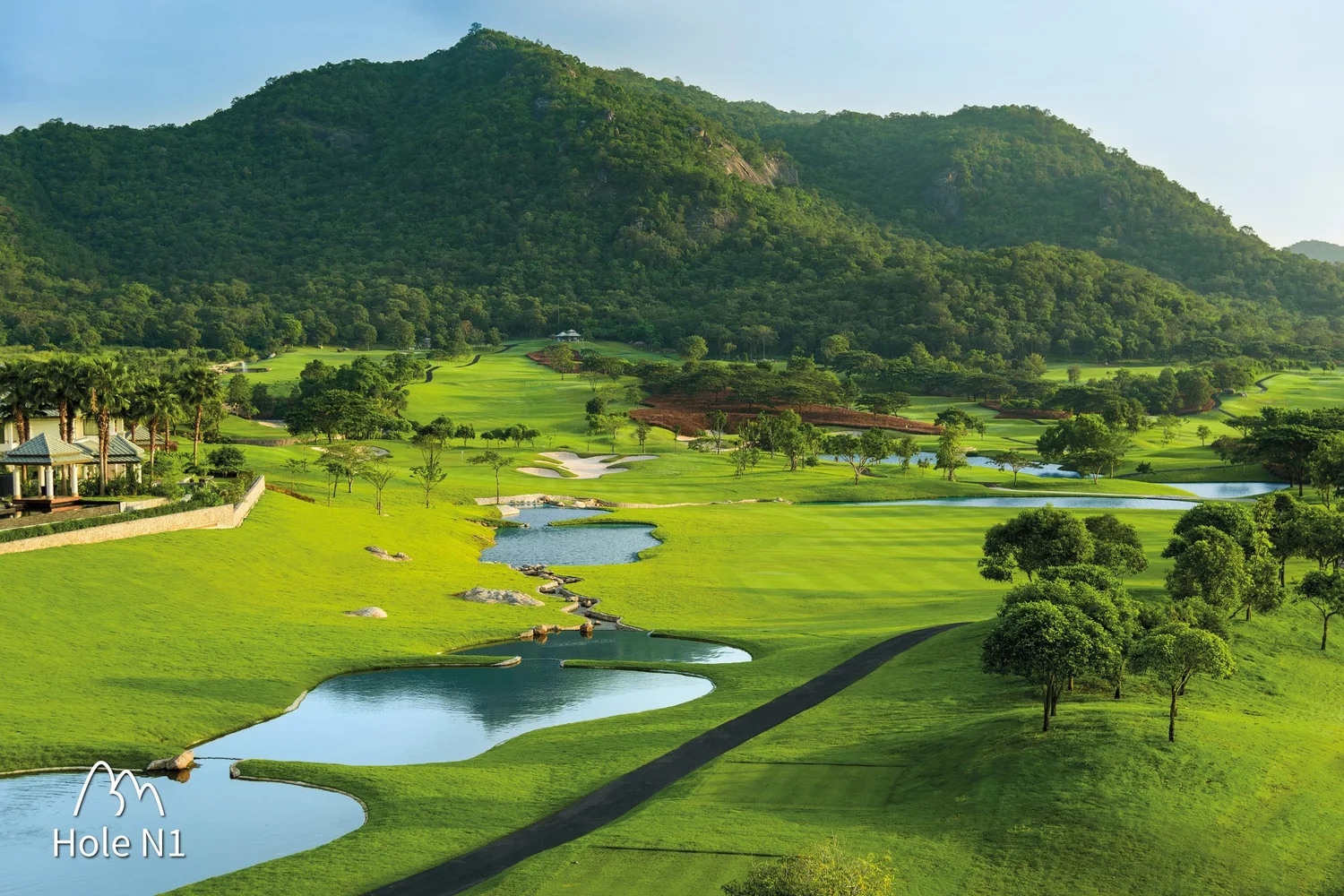
Opened in 2007 and designed by Hans Ernie Eriksson, Black Mountain has risen to become one of Thailand's most celebrated courses. The layout stretches across hilly terrain with lakes, mountain backdrops, and the kind of conditioning associated with courses two or three times the price. Black Mountain has hosted multiple Asian Tour events and was voted Asia's Best Golf Course at the World Golf Awards — a recognition that resonates with the golfers who make the pilgrimage to Hua Hin specifically to play it. The clubhouse is palatial, the service exceptional, and the halfway house produces the best som tam in Thai golf.
Banyan Golf Club
Designed by Schmidt-Curley and set in the lush hills between Hua Hin and Pranburi, Banyan Golf Club is a relative newcomer that has quickly established itself as one of Thailand's finest. The course makes excellent use of its natural terrain — particularly in the back nine, where dramatic elevation changes create some of the most photogenic and challenging golf on the Gulf of Thailand. The 180-degree panoramic view from the par-3 12th tee is one of the most impressive in Asian golf. Green fees typically run USD $90–$130.
Golf in Bangkok — Urban Golf at its Best
Bangkok's golf scene is defined by the logistical ingenuity required to build world-class courses within commuting distance of one of Asia's most congested cities. The results are, in many cases, remarkable. Courses like Nikanti Golf Club (a Graham Marsh design notable for having no bunkers — replaced by swales and collection areas), St. Andrews Golf Club, and the venerable Royal Golf & Country Club offer excellent golf within 45–60 minutes of Suvarnabhumi Airport.
For golfers transiting through Bangkok, a day round on the way to or from Phuket or Hua Hin is a genuine option and adds another dimension to a Thailand golf itinerary. The city's proximity to multiple highway-accessible courses makes scheduling straightforward, and Bangkok-based transfer operators are experienced in coordinating same-day airport connections.
What to Expect: Thai Golf Culture
Understanding a few practical realities of Thai golf helps set expectations and enhances the experience for first-time visitors:
- Caddies: Every course in Thailand assigns caddies, and the fee (typically THB 300–500) is included or added to the green fee. Tipping your caddie an additional THB 200–400 for a full round is customary and appreciated. Thai caddies are invariably knowledgeable about their course and invaluable for reading greens.
- Dress code: Collared shirts and tailored shorts or trousers are required at virtually every Thai course. Denim is universally prohibited. Courses at the premium end (Blue Canyon, Black Mountain) enforce dress standards more strictly.
- Pace of play: Thai courses are managed by starters who actively monitor pace. Four-and-a-half to five hours for 18 holes is the norm; rounds rarely drag beyond this.
- Cart: Power carts are available at every course, though many golfers choose to walk — Thai caddies are accustomed to walking and generally prefer it.
- Green fees in USD: Most courses quote in Thai Baht but accept US dollars; credit card surcharges (2–3%) apply at most venues. ASEAN Links negotiates package rates that remove these surcharges for tour guests.
Best Time to Golf in Thailand
Thailand's golf season runs broadly from November through April, when the northeast monsoon brings dry, clear weather to both Phuket (southwest coast) and Hua Hin (east coast). May to October sees intermittent rain — not necessarily a deal-breaker, as Thai courses drain quickly and afternoon showers are often brief, but wet-season conditions do affect course presentation and playing experience.
December and January represent peak season with the best weather but highest prices; February and March offer an excellent balance of good conditions and slightly lower demand. April can be hot (35°C+) but remains popular with Australian golfers on school-holiday schedules.
Planning Your Thailand Golf Tour
Most Australian golfers spending a week in Thailand based in Phuket or Hua Hin comfortably fit in four or five rounds with time left for beach days, cultural exploration, and the extraordinarily good food both regions offer. A typical itinerary for a Phuket golf holiday might look like: arrive, settle in; Day 2 — Blue Canyon Canyon Course; Day 3 — Red Mountain; Day 4 — boat day or day tour; Day 5 — Loch Palm or Mission Hills; Day 6 — departure golf at Phuket Country Club.
At ASEAN Links Golf, our Thailand golf tours include pre-booked tee times at the region's best courses, airport transfers, accommodation at handpicked properties, and the kind of local knowledge that turns a good golf trip into an extraordinary one. Golf. Explore. Asia.