
Golf Courses
Montgomerie Links Vietnam Review: Strategy and Local Guide
A detailed look at Colin Montgomerie’s par-72 course between Da Nang and Hoi An, including risk-reward holes, practice facilities, realistic travel times and the best way to use it in a golf itinerary.
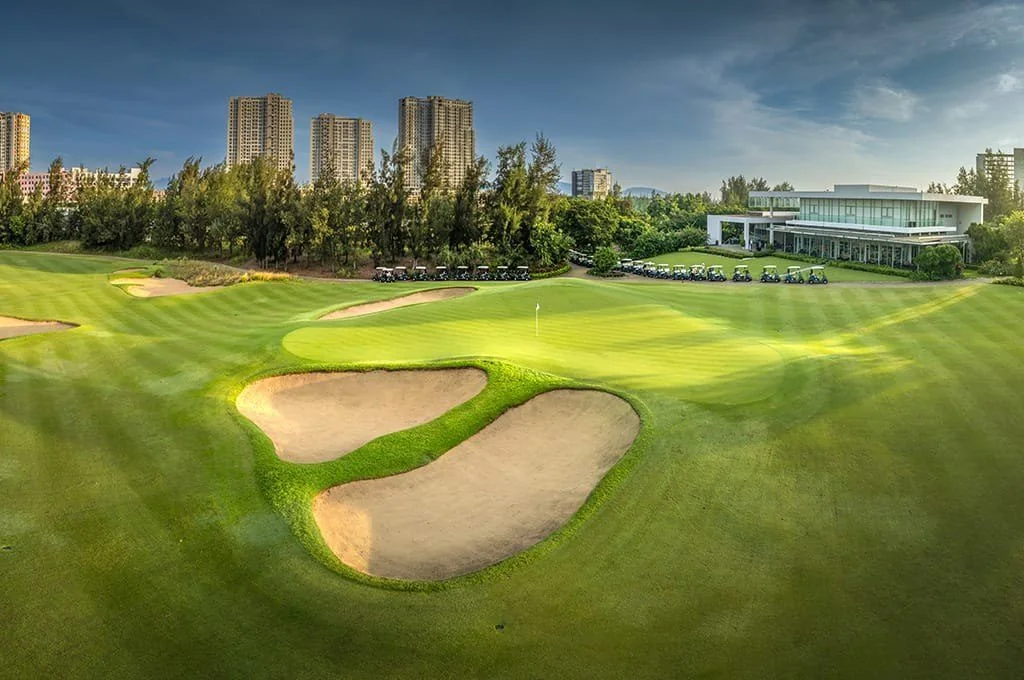
Montgomerie Links Vietnam is one of the most useful courses in the Central Vietnam rotation. It is close to both Da Nang and Hoi An, has the region’s strongest all-round practice setup and presents enough strategy for good players without becoming punishing for a mixed social group. That combination makes it an excellent first round after an international flight.
The course measures 7,090 yards and plays to par 72. Colin Montgomerie and IMG worked with sandy soil, dunes, native vegetation and a naturally high water table. The result is links-inspired rather than a strict seaside links. There are lakes and streams, while several holes use framed fairways and resort-course presentation. The common thread is strategic bunkering and the need to approach large greens from the correct angle.
Montgomerie is often described as an easier option than Hoiana Shores or Ba Na Hills. That is only partly accurate. It is accessible from the correct tees, but strong players still need to think. The scorecard contains short par 4s, long par 5s and several holes where maximum distance is not the safest route to birdie.
Course Design and Architectural Philosophy
The fairways often provide visible width, then reduce the useful landing area with bunkers, slopes or the angle into the green. A drive in the short grass is not automatically successful. If it finishes behind a fairway bunker or on the side that exposes the narrow depth of a green, the next shot can be substantially harder.
Large putting surfaces create several internal targets. Front, middle and back yardages matter more than chasing an exact flag number. When the pin is on a shallow shelf, play to the broadest section unless the wind and lie make the direct shot comfortable. The short-grass surrounds give confident chippers options, but a miss on the wrong side can leave a difficult combination of grain, slope and limited landing area.
The best players will enjoy the risk-and-reward questions. The course does not demand conservative golf on every hole. It asks the player to recognise when aggression has a clear benefit. That is particularly obvious on the short par-4 15th, where the direct route can create a genuine scoring opportunity but brings water and awkward recovery positions into the decision.
Hole-by-Hole Highlights and Signature Challenges
Hole 1: a strategic opening par 5
The first reaches 581 yards from the gold tee and 552 from blue. The initial landing area is generous, but the next shot must avoid a well-placed fairway bunker before the approach to a protected green. Unless the drive is long and perfectly positioned, treat it as a three-shot hole and lay up to a full wedge number.
Holes 2, 4 and 5: early distance-control tests
The second is a par 3 of 197 yards from gold and 176 from blue, set near casuarina vegetation where the prevailing wind affects club selection. Hole 4 is the shortest par 4 on the course, playing from an elevated tee toward a partly hidden landing area with water to the right. Hole 5 is a short par 3 with a full water carry. The dune near the green can shelter the target from the wind felt on the tee, so confirm the effective direction with the caddie.
This early stretch is why a proper warm-up matters. Within five holes you may hit a long iron, positional tee shot, wedge and controlled flight over water. Arriving with only five rushed drivers is not enough preparation.
Hole 15: driveable, but not free
The 15th measures 371 yards from gold, 346 from blue and 277 from white. Longer hitters may reach or approach the green, but the water carry and protected target create a real penalty for a poor line. If the wind, tee position and group format support the attempt, driver is reasonable. If not, lay up to a distance you like and use the wedge advantage.
Holes 16 to 18: a strong finish
The par-4 16th plays downhill with a left-to-right sloping fairway. Avoiding the right fairway bunker opens the approach to a large green protected by sand and water. Hole 17 runs beside a vegetated dune and asks the golfer to work between fairway bunkers. The 18th is the longest par 5, reaching 588 yards from gold and 564 from blue. Long hitters may consider the green in two, but the slightly uphill finish makes a controlled three-shot plan the reliable scoring route.
Local Conditions: Wind, Turf, Greens and Seasonality
The sandy base drains well and supports the course’s firm visual character, although actual playing conditions depend on recent rain, maintenance and cart policy. The putting surfaces use warm-season grass and can show grain, particularly late in the day. Fixed online claims about green speed are less useful than five minutes on the practice green immediately before the round.
The property sits close enough to the coast for wind to influence the exposed holes. Direction and strength can change through the day. Early tee times usually provide cooler conditions and a gentler start during hotter months. Afternoon golf can be enjoyable, but players should expect the breeze to become a larger factor.
From roughly February through August, the course is commonly used in dry-season Central Vietnam itineraries. September can remain workable, while October to December needs more weather margin. January varies and can bring cooler or unsettled conditions. These are planning patterns, not guarantees, so final tee-time choices should use a current forecast and club advice.
A common mistake is underestimating humidity on a course that looks open and breezy. Drink before you feel thirsty and use shade at the course shelters. For tournament groups, send water and start-time instructions before departure rather than trying to organise everyone on the first tee.
Caddie Insights and On-Course Strategy
Tell the caddie your normal carry distances and shot pattern early. Their value is highest when the conversation moves beyond a single flag number. Ask which fairway side gives the cleanest look, whether the wind is different near the green and where the ball can finish safely if the strike is imperfect.
- Use front and back numbers on the large greens.
- Confirm the full water carry on holes 5 and 15.
- On grain-affected chips, choose a landing spot before choosing trajectory.
- Play the par 5s backward from a preferred wedge yardage when the green is not reachable.
- Keep pace by making the club decision before it is your turn to play.
Montgomerie is a good course for a hosted round with a PGA Professional because the strategic choices are visible and immediately useful. Jerram can play nine or 18 holes with individuals or groups, subject to availability, while ASEAN LINKS handles the tee time and transport.
Clubhouse Facilities, Practice Grounds and Dining
The practice facilities are a major strength. The club has an undercover driving range, golf academy, putting areas and substantial short-game space. Arrive 50 to 60 minutes early if practice is part of the day. That is enough time to check in, change, hit a structured warm-up and spend several minutes on the putting surface.
The clubhouse includes locker rooms, a pro shop and restaurant facilities. On-site rooms and three-bedroom pool villas also make short stay-and-play or corporate formats possible. The location between Da Nang and Hoi An means most groups do not need to stay at the course, but the villas can suit a private group that values shared space.
For an arrival-day round, do not schedule golf too close to the aircraft landing time. Immigration, baggage and golf-club delivery can vary. A better plan is hotel check-in and a later round only when the flight arrives with generous margin. Otherwise, play Montgomerie the following morning.
Logistics: How to Get There and Transfer Times
The club’s official location information places it about 20 minutes from Da Nang International Airport and roughly 15 minutes from both Da Nang and Hoi An. Those are useful best-case references. For group planning, allow about 20 to 30 minutes from the southern Da Nang beach resorts, 25 to 35 minutes from central My Khe and 20 to 30 minutes from Hoi An depending on the hotel and traffic.
A private transfer avoids the problem of separating golfers and bags across several vehicles. It also makes the finish flexible if the field is slow. ASEAN LINKS schedules pickup for a 45-minute pre-tee arrival as standard, or longer when the group wants a proper range session.
Montgomerie pairs well with Hoi An after the round. Morning golf leaves time for a shower, late lunch or hotel break before going into the Old Town. Avoid carrying clubs in a sightseeing vehicle all evening. A dedicated golf transfer should return the bags securely before the group heads out.
How to Include Montgomerie Links in Your Golf Itinerary
Montgomerie Links appears in the four-day LINKS Escape, seven-day LINKS Central and 10-day LINKS Discovery. On a longer rotation, it is often the first or second round because the course is convenient, fair for mixed handicaps and supported by excellent practice facilities.
A strong four-course sequence is Montgomerie Links, Legend Danang, Hoiana Shores and Ba Na Hills, with a rest or touring day before the final two rounds. Laguna Lăng Cô can be added when the trip extends to nine or ten nights.
Use the ASEAN LINKS golf booking form for a single round or ask Jerram to assemble the full holiday. The quote can include caddies, carts, private transfers, hotels and additional rounds, with the exact inclusions confirmed before payment.
Frequently asked questions
Montgomerie Links Vietnam FAQs
Is Montgomerie Links suitable for a first round in Vietnam?
Yes. Its location, broad tee selection and strong practice facilities make it one of the best opening rounds for a Central Vietnam itinerary.
How far is Montgomerie Links from Da Nang and Hoi An?
For group planning, allow about 20 to 35 minutes from the main Da Nang beach areas and roughly 20 to 30 minutes from most Hoi An hotels.
What are the best holes at Montgomerie Links?
The strategic opening par 5, short par-4 fourth, water-carry par-3 fifth, driveable par-4 15th and long par-5 18th are among the most useful holes for understanding the design.
Does Montgomerie Links have a driving range?
Yes. The club has an undercover driving range, a golf academy, putting areas and extensive short-game practice facilities.
Can ASEAN LINKS arrange a hosted round with Jerram?
Yes, subject to availability. A hosted nine or 18 holes can be combined with the tee time, private transport and other Central Vietnam golf arrangements.
Sources and updates
Course specifications and operating information were checked against the club’s official material and the supporting sources below. Conditions, policies and travel times can change, so ASEAN LINKS reconfirms the important details before travel.
An ideal first Central Vietnam round
Book Montgomerie Links with time to practise properly
Send Jerram your hotel, preferred date and player numbers. ASEAN LINKS will confirm the tee time, allow the right warm-up window and arrange private transport for golfers and clubs.